Inspired by Crip Theory, The Body's Tale of Mercy & Vengeance (BOTAMEVE) is a feminist fight club where members examine the mercies and harms their bodies have experienced—whether rooted in sexuality or disabled lived realities.
The BOTAMEVE members come from diverse backgrounds: some are grieving the recent loss of a partner, some are young individuals facing chronic autoimmune conditions, others are long-term caregivers, visually impaired individuals, or those recovering from toxic relationships and battling gender role prejudices.
Members will engage in a seven-class series, where participants gather either online or in museum spaces to collectively construct narratives responding to bodily injustices. Throughout the process, members establish codes of conduct, listen to others' or their own stories, learn martial arts, explore boundaries, design their own curriculum, and ultimately develop personalized scripts for either reclaim vengeance or gratitud for their bodies. The BOTAMEVE centers on the creation of an "incompletion project"—a living, evolving approach to resisting compulsory heteronormativity and able-bodied assumptions.
The class series is limited to 5-8 participants. We welcome individuals who identify as queer, disabled, or are currently on a personal healing journey to participate and join the Fight Club. To register, please fill out the form, which would ask to fill the following information:
A self-introduction, explaining why you wish to participate in the Fight Club;
A reflection or insight from your healing journey that you are willing to share with other participants;
Your availability for in-person and online participation for the classes (e.g., flexible schedule/available every Wednesday night);
Any accommodations you may require for in-person participation (e.g., need for a guide, reduced lighting, or lower sound levels).
We will confirm participants based on the order of registration and their availability for in-person attendance.
Please note that the paricipation experience may involve sharing personal or potentially traumatic experiences, so participants are advised to carefully consider their own circumstances before registering.
The members will be divided into two groups and share one topic online that they wish to focus on discussing. This can be a situation they are currently facing or something they want to change. Each person is an expert in their own experience; others will ask questions, listen, and take notes but will not offer advice.
Class 2: Goal Setting, Rule-Making, and Rewriting the Glossary of Mercy and Harm (2 hr)
In this class, members of BETAMEVE will set personal and collective goals for revenge or gratitude, establish a code of conduct, and, through personal experiences and discussions, jointly explore, learn, and edit a glossary of harmful and compassionate behaviors. Additionally, the group will collectively decide on the scheduling and format of subsequent courses to ensure the process meets the needs of all members.
Class 3: Fighting & Self-Protection Class (2 hr )
An introductory judo class welcoming people with disabilities and visual impairments, focusing on self-defense techniques and how to physically protect oneself.
Class 4: Boundary-Making Class (2 hr)
Understanding how you establish emotional and physical boundaries.
Classes 5 & 6: Collective Invitation (TBD)
Members will independently choose instructors to invite. These may include legal experts to discuss how to defend oneself legally, or engineers to demonstrate tactics for disrupting AI bots and online harassers, empowering participants to combat cyberbullying. Options also include trauma-informed yoga for healing through yoga practices. Members may also choose to rest, as rest itself is a form of self-learning and revenge.
Class 7: Online Fightback & Digital Archiving (1.5 hr)
Members of the BETAMEVE will eventually have to return to daily life on their own. The final class will be held online, allowing everyone to continue the theme of seeking justice for their bodies in a digital way. In this class, participants will use an "integrated care" approach to decide what content they are willing to share and archive their experiences on USB drives. These drives will be distributed in radical bookstores and community spaces, open-sourcing the methods and outcomes of the BETAMEVE so that these practices can dynamically continue to evolve.
Note: The course sequence may change based on members' & instructors' availability.
Operating Principles
Emphasize personal autonomy, self-direction, and voluntary participation.
Ensure that activities do not exceed individual physical and mental capacities.
i. No Advice
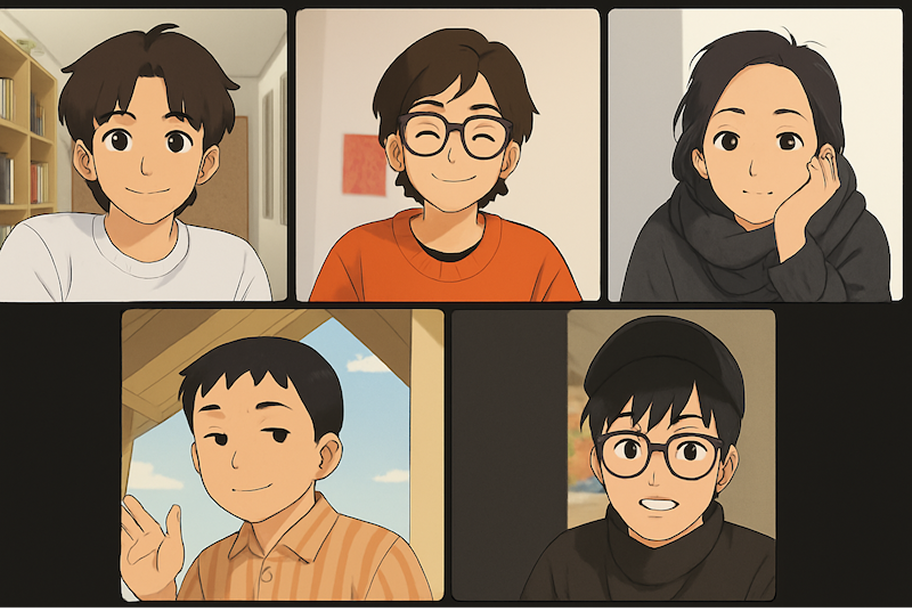
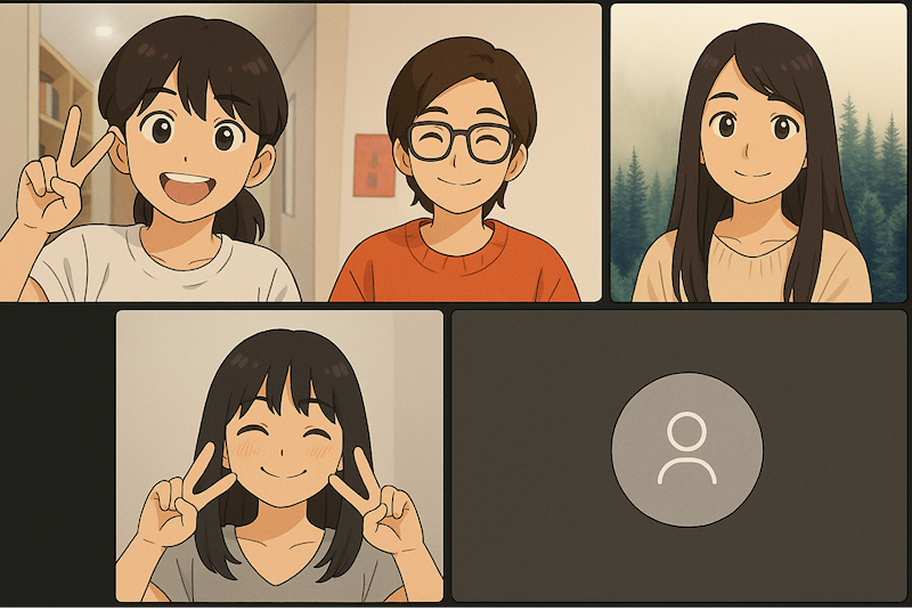
The animated image of the participants having Hologram
A care of four
The first class helps us gain a clearer understanding of each participant's current situation.
In No Advice, the group engages in a peer-to-peer practice of care distribution. This approach is adapted from Hologram, in which participants form groups of four and share a topic they want to discuss—whether it's a situation they're currently facing or something they wish to change.
Each session lasts about an hour and a half. Every member of a four-person group has the chance to be "the Hologram," while the other three take on the roles of "doctor," "therapist," and "social worker." During the Hologram's 15-minute sharing, each role poses questions related to the Hologram's physical, mental/emotional, or social well-being.
The Hologram's Tasks:
Invite three people to meet regularly.
Act as an expert on their own health and experiences.
Teach others that "it is possible to ask for support, with dignity."
Articulate needs.
Support the three triangle members in forming their own support triangles.
The Triangle Members' Tasks:
Take notes.
Ask questions.
Observe patterns over time.
Refrain from being an expert or giving advice.
Serve as a living medical record.
Create their own support triangle.
After each member has spoken for 15 minutes—60 minutes in total—participants offer reflections by sharing wishes, observed patterns, or provocations. The goal of this practice is to foster a network of individuals who feel stable and healthy, capable of surviving and thriving in the face of current and future crises.
Furious. Then later, fear.
The class invited the somatic practitioner and long Hologram community member, Zsófia Samodai, to guide the session. She first explained the origin of the Hologram[^first] and led the group in a somatic meditation practice, inviting participants to reflect on an unjust event from the past week and reconnect with their bodily sensations.
Participant A raised the issue of how individuals with disabilities are frequently denied access not just to spaces, but to the imagination of inclusion itself. Their lived experience highlights how normative infrastructures—whether physical, social, or attitudinal—are often designed without them in mind. The frustration born from such systemic neglect becomes a catalyst for resistance and advocacy.
Participant B brought attention to the persistent problem of interpersonal violence being minimized or silenced, especially when the perpetrator is socially protected. The pain was compounded not only by the act itself, but by the community's failure to acknowledge harm. Their testimony reflects a broader pattern where survivors must battle not only personal trauma but cultural denial.
Participant C reflected on the subtle ways in which deviations from gender or sexual norms—whether in self-presentation, language, or boundaries—can disrupt established social relationships. Their account underscores how quickly intimacy can become conditional, shaped by scripts that presume and enforce heteronormativity.
During the sharing, patterns emerged showing how individuals often face ignorant, tedious, and unimaginative interactions. Social norms typically fail to respond to diverse bodily experiences, igniting anger in each participant. The spark of anger ofen propels them onward, motivating them to advocate for their rights and speak out.
In the second session, the emotion pattern of fear came to our focus.
Participant D recounted a pivotal moment in a clinical setting: witnessing another patient's condition triggered a visceral awareness of what might lie ahead if her own illness were left unmanaged. A grim remark from a medical professional—though cloaked in dark humor—became a strange source of motivation. Since then, she has adhered strictly to treatment routines, navigating her care somewhere between fear and determination.
Participant E described the past year as among the most harrowing of her life. While already caring for a family member with complex disabilities, she was confronted with an unexpected mental health crisis within the household. Holding the weight of this dual care burden, she worked tirelessly to maintain the appearance of everyday normalcy. Her account reflects the often-invisible labor of caretaking and the emotional strength it demands.
Participant F shared how her body began to break down under the pressures of a demanding workplace. In moments of acute overwhelm, the only space she could retreat to was the restroom—a temporary refuge where she could catch her breath and calm her arrhythmia. Her story points to the hidden costs of labor in systems that normalize burnout, where even minimal self-regulation requires carving out secrecy and stillness.
Few effective strategies exist for chronic, long-term illnesses, leaving those who are ill trapped in perpetual worry and anxiety about what the future holds. Their caregivers share the same fears. If the illness worsens, everything they have painstakingly built could turn upside down overnight. The world spins at breakneck speed, allowing no room for sickness or frailty. We're all afraid — afraid of pain, and even more afraid of being abandoned by a world indifferent and impotent to diverse life circumstances.
These emotions — anger and fear — are as constant and necessary as breathing, woven into every living moment of bodily experience.
Sufferings in the Dark
When a doctor finally diagnosed my condition and handed me a prescription, it felt as if my suffering had also been named, even though the healing road is still long ahead, the pain has atleast shifted from invisible to visible. I could finally have names on what was hurting me. Likewise, when a judge issued a verdict, black words written on the white paper, the violence I had experienced was recognized and validated.
–– Yet before such acknowledgment, much suffering remains unnamed and hidden: fear of the future, the unrecognized labor of caregivers, medication side effects, being gaslit by others or even by oneself, psychosomatic symptoms, frustrations, daunting logistics of getting to hospitals or courtrooms… Countless forms of pain before the pain lie scattered in the dark, overlooked by institutions and absent from any roster of "healing" goals.
Beyond where language can grasps, there is so much experiences that remains in the dark.
The Hologram practice was inspired by the Greek financial crisis, during which many vulnerable and neglected individuals were left without care. In response, the Social Solidarity Clinic in Thessaloniki initiated an experiment to provide free, non-hierarchical care, resulting in the creation of the "Integrative Model."
ii. Goal Setting, Rule-Making, and Rewriting the Glossary of Mercy and Harm
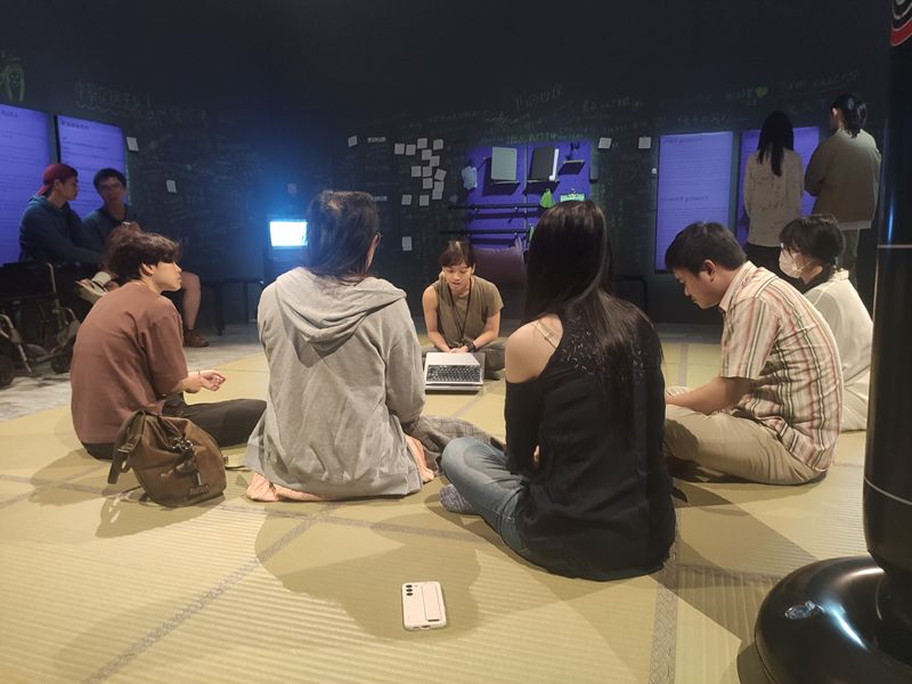
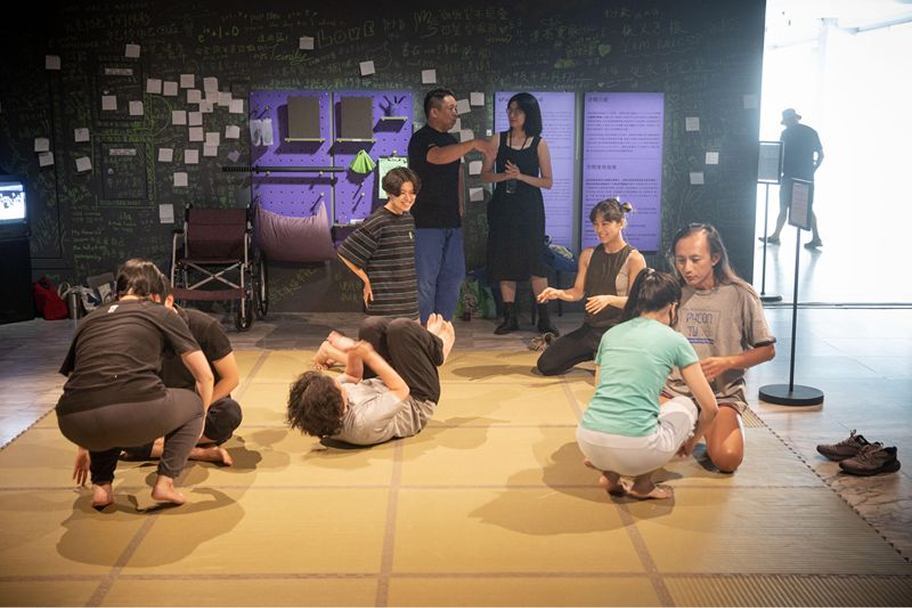
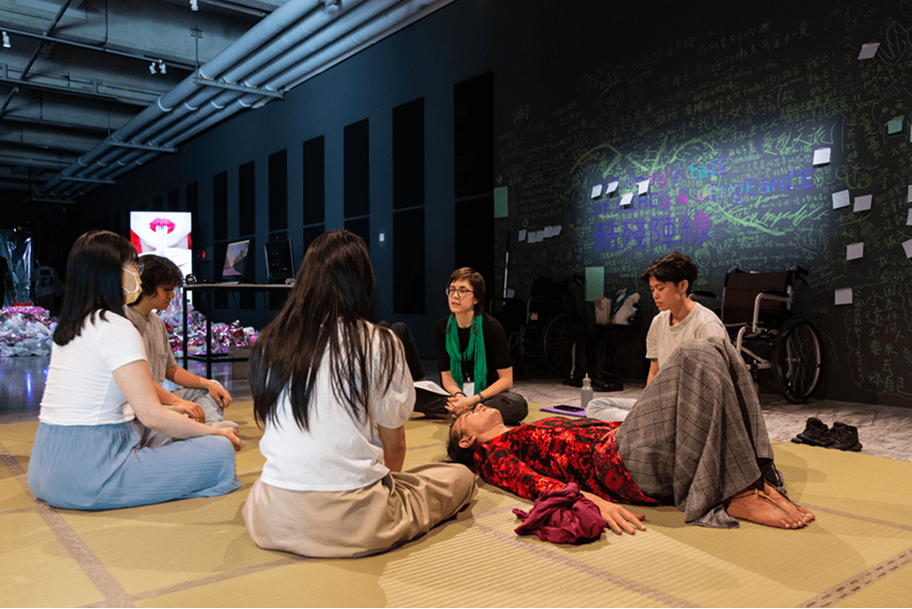
Our first physical gathering at a museum setting.
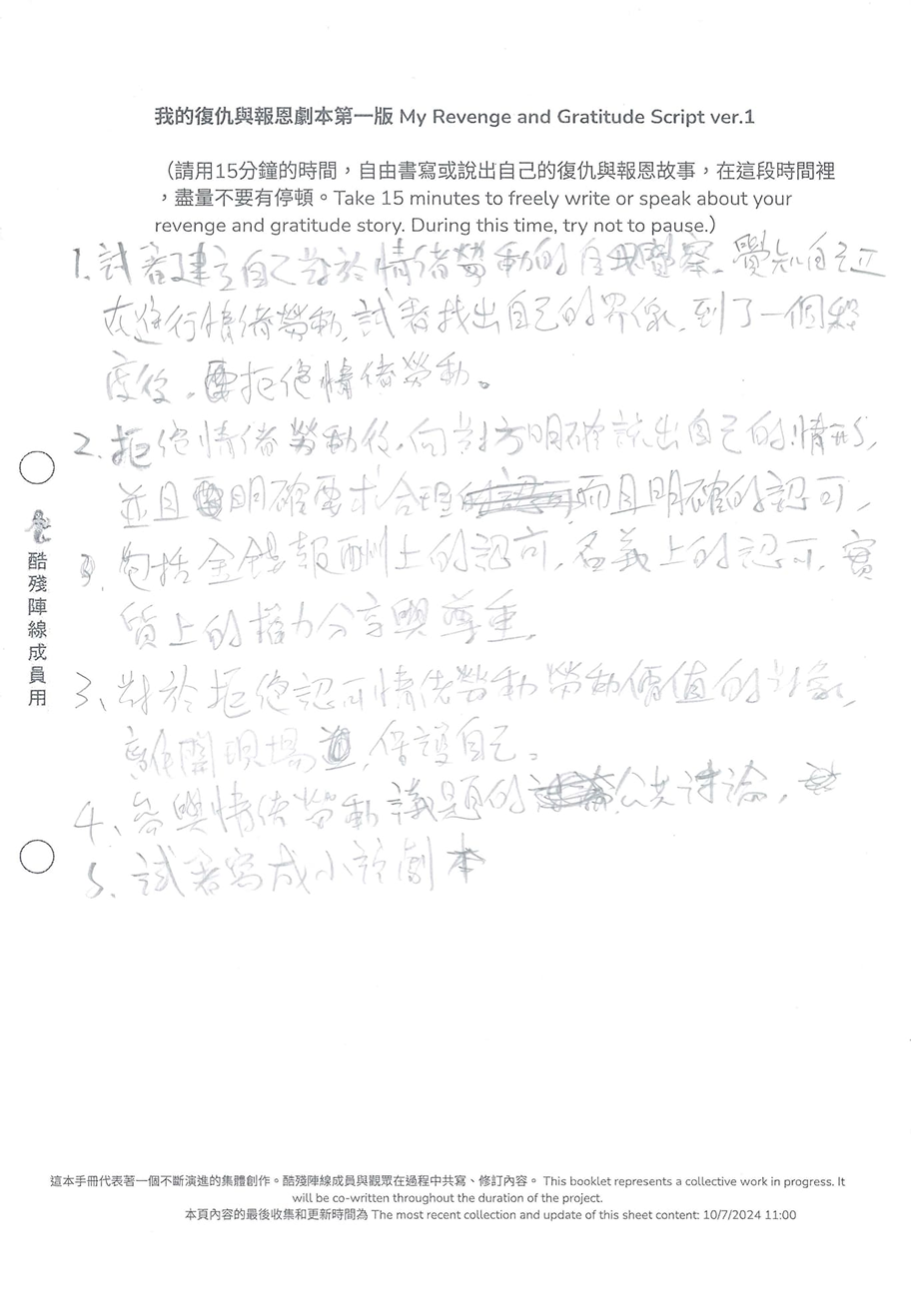
After gaining a brief understanding of everyone's backgrounds, the second session of the BOTAMEVE began — we set our personal goals, established membership rules, compiled and rewrite a glossary for navigating abusive experiences, and finally concluded with a free writing exercise where we collaboratively drafted scripts of bodily gratitude or revenge.
👉 Class Transcription (only in Chinese)
Goals
Explore Personal Narratives
Encourage members to reflect on unjust experiences related to gender and physical disabilities, and to construct personal narratives centered on either revenge or gratitude.
Foster a Supportive Environment
Work together to assess and ensure the environment's safety, allowing members the freedom to share — or not to share — their experiences.
Develop Action Plans
Employ scriptwriting to envision desired outcomes and chart actionable steps, including the expansion of relevant knowledge, methods, resources, and support networks.
Procedure
Consent and Safety Notification
Discuss and sign consent forms, indicate the location of restrooms, and clarify that participants are free to take breaks whenever they need.
Introduction and Rules
Facilitate self-introductions and explain the class rules, emphasizing respect for diversity, openness to learning, and mutual support.
Body Positioning Exercise
Invite members to visualize the relationship between their own body and their target of revenge or gratitude, considering what might be the physical distance and orientation with their target.
Method Selection and Planning
Use BOTAMEVE Member's Manual as a reference to identify strategies and carrying out their plans.
Vocabulary Exploration
Review the glossary list together for navigating abusive experiences, so to better articulate their experiences and emotional states.
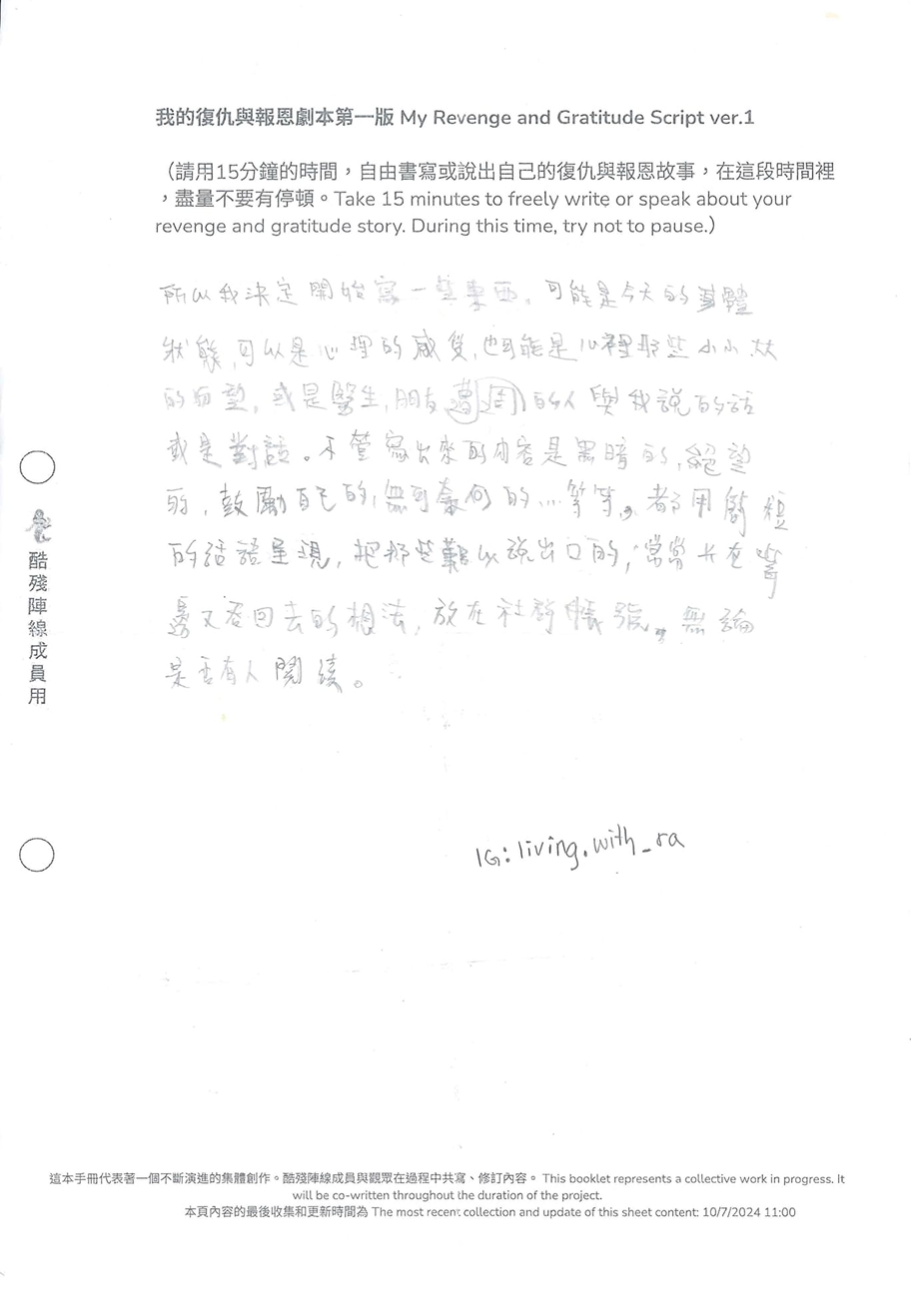
Free Writing
Conduct a 15-minute timed free writing session for members to draft the first version of scripts on revenge or gratitude.
Sharing and Discussion
Time for member to exchange feedback and insights.
Note: Establishing and upholding a set class procedure can also be viewed as practicing one's own boundary-setting skills.
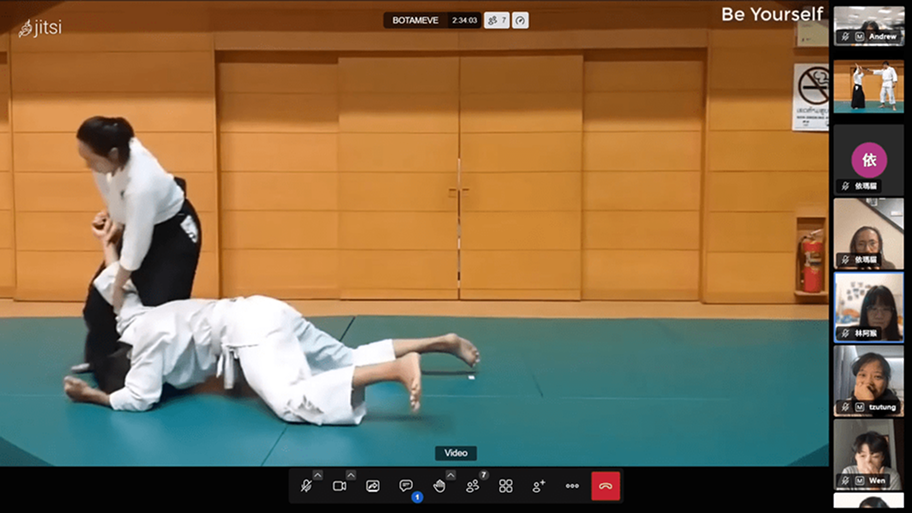
iii. Fighting & Self-Protection Class
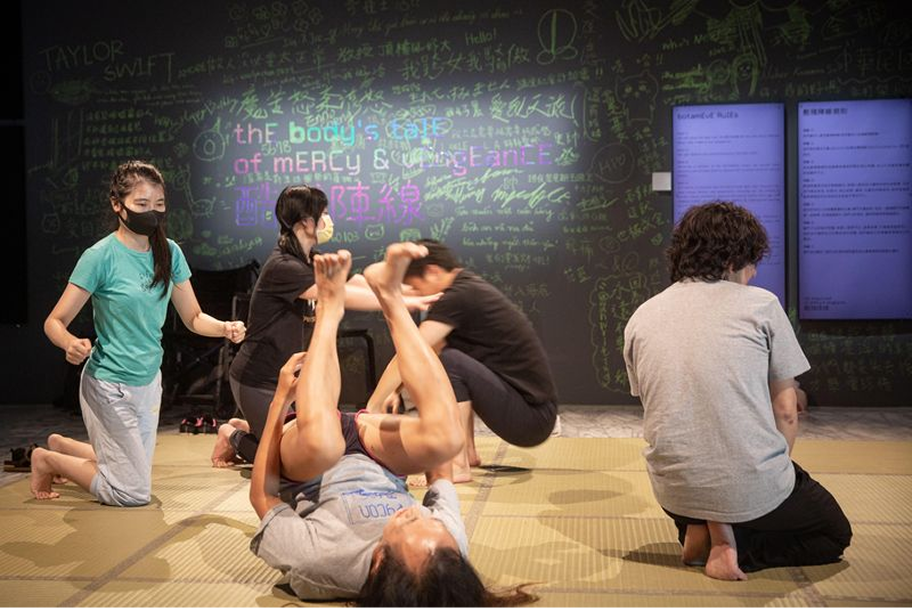
BOTAMEVE member Thu, Dec 21, 2024, Image courtesy: WERD NA,
What surprises me most is that this inclusive martial arts class takes place in an art museum!
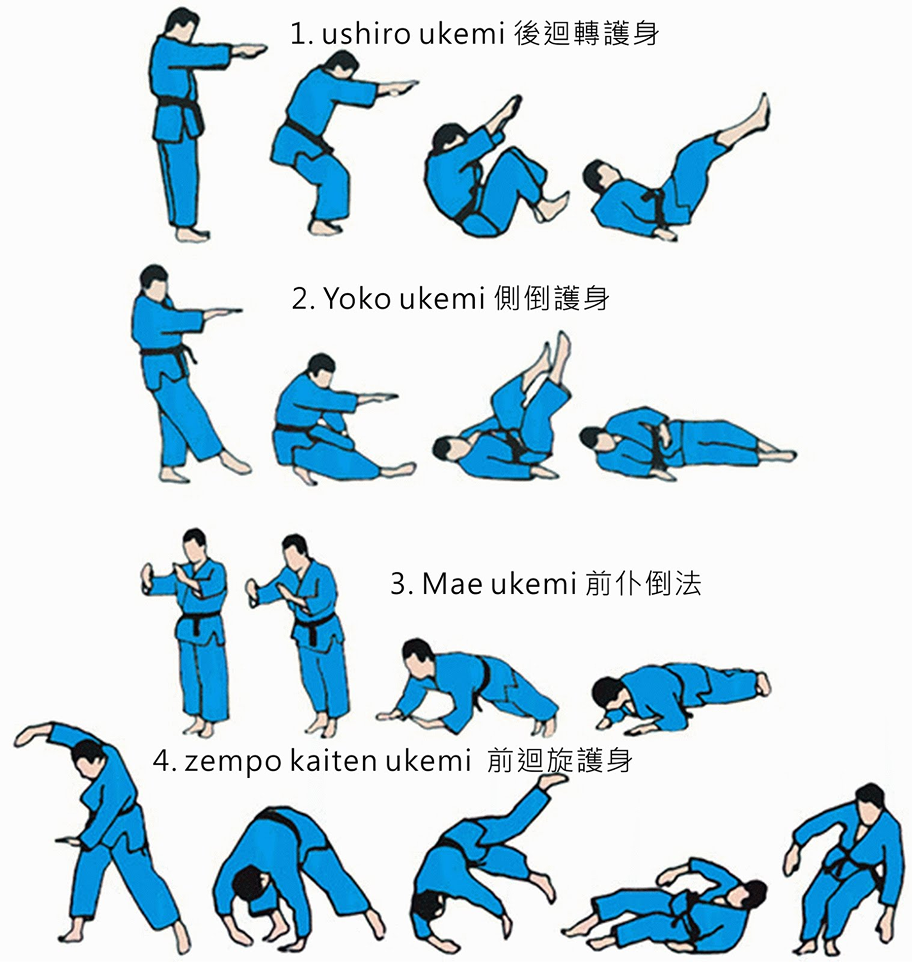
The course description for Fighting & Self-Protection indicates it's a basic Judo class focused on self-defense and physical protection, and open to people with visual impairments.
I had never tried any form of martial arts before, so before attending, I assumed martial arts were all about learning "how to attack." Yet I quickly realized that "how to protect yourself" is far more fundamental. Martial arts center on self-protection and building strength, rather than seeking out fights. They also offer practical skills for everyday life—such as how to avoid serious injury when falling or colliding with something.
Our instructor, Du Tian Yo (杜天佑), shared his experiences teaching visually impaired students. For them, falling can be frequent and more dangerous—sometimes life-threatening. By learning Judo, they may develop reflexes to protect themselves if they stumble, reducing the risk of harm.
According to Instructor Du, one of the key reasons to train in martial arts isn't about learning to attack; it's about cultivating enough physical strength and confidence that potential aggressors are less likely to view you as a target. "If you seem weak and unlikely to fight back," he explained, "you're more easily singled out."
TT has trained in Brazilian Jiu-Jitsu (BJJ), which involves practicing from "disadvantageous" or "pinned" positions. Initially, I wasn't sure why a martial arts class was included in the BOTAMEVE curriculum by the artist. But TT, mentioned how, during the #MeToo movement, they frequently encountered malicious legal or verbal attacks. It often felt akin to a physical fight: you'd already be knocked down on the floor even before you can blink. — Therefore, the physical techniques become a parellel practice that better situate them responding to the psychologically and strategically when facing aggresion.
I feel excited, as my body, not only learns how to "fall safely" (ukemi), but ready to become one of the element in my psychological preperation with the preportratours.
Written by WERD NA, BOTAMEVE member Thu, Dec 21, 2024 1:34 AM
English ransalted and edited by TT Fri, Jan 10, 2025 5:53
The goal of this class is to help us understand how to establish emotional and physical boundaries.
1. Somatic Meditation
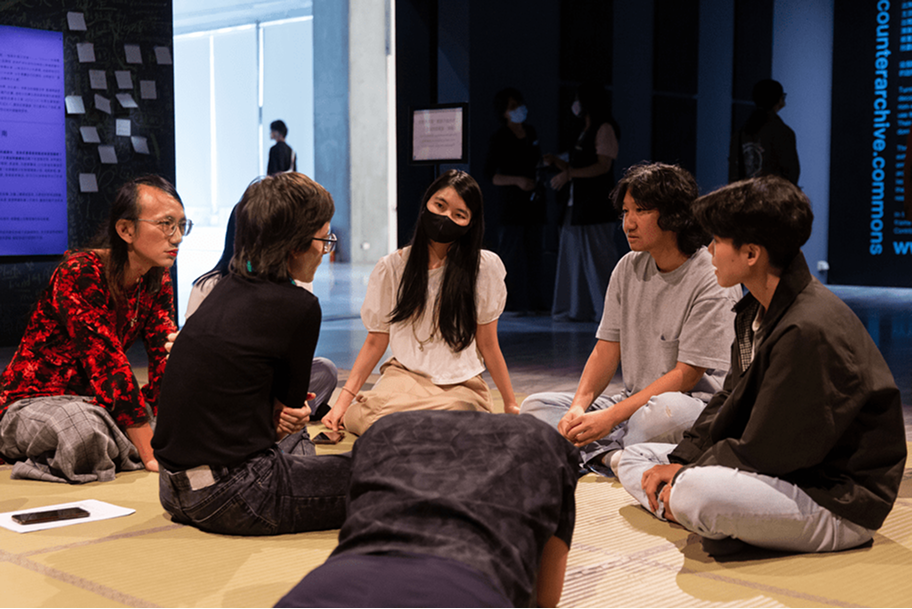
At the start of class, our guide, Zsófia Samodai led us in a meditation exercise to help settle both body and mind. We began by finding a comfortable position, breathing rhythmically, and tuning into our physical sensations. Next, Zsófia asked us to recall a moment from the past week that was unpleasant or involved wanting to refuse something but being unable to do so. We mentally returned to that instant, focusing on the specific details—especially how our bodies felt at the time.
After this reflection, we took a deep breath to release any lingering emotions, fully returning to the present. From everyone's sharing, it became clear that unpleasant moments manifest differently in each body: some people experienced a heaviness in their heads, while I noticed my breath becoming shallow, as if I were holding it in my chest, ready to act on that tension.
In contrast, for the second part of the exercise, we recalled a pleasant moment from the past week—no matter how small. I remembered chatting with a friend in the car, feeling deeply relaxed, my breathing slow and steady. Compared to the earlier exercise, this highlighted just how much my breathing shifts according to my emotional state: quick and shallow during stress, calm and deep in moments of ease.
2. Listen / Express
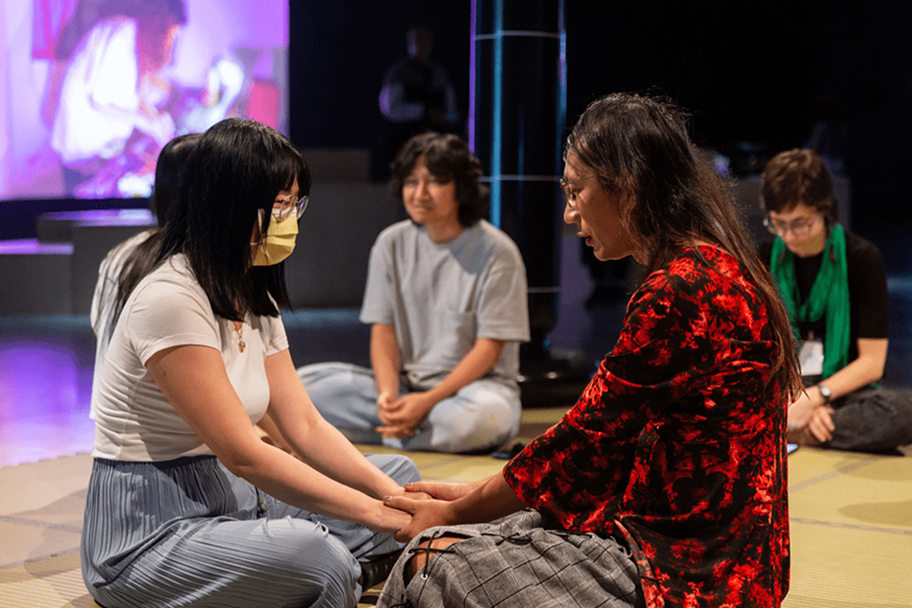
The second exercise centered on "simply listening" and "expressing one's needs." Two people sat facing each other. One would speak in short sentences—"I want," "I hope," or "I'd like to…"—while the other person just listened, offering no verbal response.
Zsófia pointed out that when we hear someone else's needs, our minds tend to go into overdrive—analyzing and trying to give immediate feedback. This exercise was designed to help us set aside that reflex and instead focus on hearing the other person's words.
During the session, my partner noted that whenever I stated what I wanted, I would subconsciously smile. Meanwhile, I realized that when I listened to the other person share what they wanted, I often felt a kind of sympathetic resonance, sometimes even agreeing silently. This subtle agreement showed on my face, which, in its own way, was already a response.
3. Learning to Say "No"
The third exercise—learning how to say "no"—proved to be the most challenging for me. One person would begin with a request such as "Can I…" or "May I…?" (e.g., "Could you get me a glass of water?" or "May I touch your hair?"), and the other person, practice to respond with a firm "no," regardless of the request.
Initially, I assumed this would be simple, but when Zsófia demonstrated it with me, I felt an unexpected wave of discomfort. Even if the request was perfectly ordinary, answering "no" left me feeling uneasy. This reaction caught me off guard, and I realized I might be something of a "Yes Man"—someone who rarely refuses others' requests.
I discovered that other participants felt the same awkwardness. Some even made intentionally outlandish requests—like "Could you clean my house for an entire day?"—just to prompt a easy "no" from their partner. Others used guilt-inducing scenarios, such as "I just had surgery; may I please sit down?"
According to Zsófia, the purpose of this exercise is to stress the importance of being able to say "no." She pointed out that when a person is truly comfortable refusing a request, their eventual "yes" carries much more sincerity.
4. Clarify and to Delay a Response
The final exercise expanded on the previous one, teaching us to pause and clarify details when someone makes a request. If needed, we could also reframe the request by asking follow-up questions or expressing our own needs.
Zsófia demonstrated a scenario to illustrate this:
I ask, "Do you want to see a movie tomorrow?"
They respond, "Which movie?" to clarify.
If I say, "A horror movie," they might reply, "I don't like horror," and suggest something else.
They then ask, "What time?" and, after hearing my suggestion, say, "I need to be home by a certain hour," and propose a different time.
Personally, I don't find clarifying details to be difficult. The interactive style in this exercise mirrors what I often do in everyday conversations—asking about others' needs and sharing my own expectations until we reach a mutual agreement. This approach not only gives everyone time to think, but also clarifies each other's intentions and requirements.
5. The Connection Between Body and Emotion**
At the end of the class, I finally asked Zsófia about the true purpose behind all these exercises. Was it meant to help us respond more authentically in everyday conversations? After all, we often regret not speaking our minds once a discussion is over. Zsófia explained that the exercise isn't about finding immediate answers—like exactly what to say or not say—but rather about learning to notice our own state in the moment.
Every conversation inevitably involves logical thought, yet these exercises are designed to heighten our awareness of bodily sensations and emotional patterns. Rather than suppressing these feelings, we learn to let them coexist with our reasoning. For example, when revisiting an unpleasant memory, Zsófia never asked us to erase or "let go" of it. Instead, we were encouraged to make room for it in our minds, acknowledge its presence, and truly listen to it. Simply hearing and recognizing these emotions felt like a major breakthrough for me.
This class was eye-opening. Although I'm usually quick to empathize with others' emotions, I often overlook my own. We tend to process emotions logically—analyzing how people express themselves—yet this class offered a different approach: when I hear something infuriating, what's happening in my body? When I feel relaxed and content, how does my body respond?
Adopting this new perspective made me realize that learning to sense and observe my own body might be a key to better understanding both myself and those around me.
vv-vi. Online Fightback & Digital Archiving
Written by WERD NA BOTAMEVE member- Thu, Dec21, 2024 1:34 AM
English translated and edited by TT- Wed, Jan22, 2025 5:46 PM
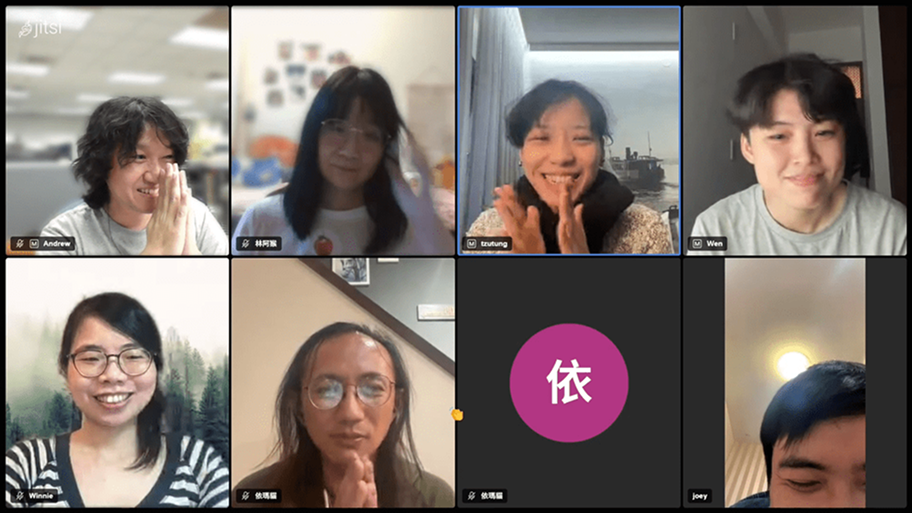
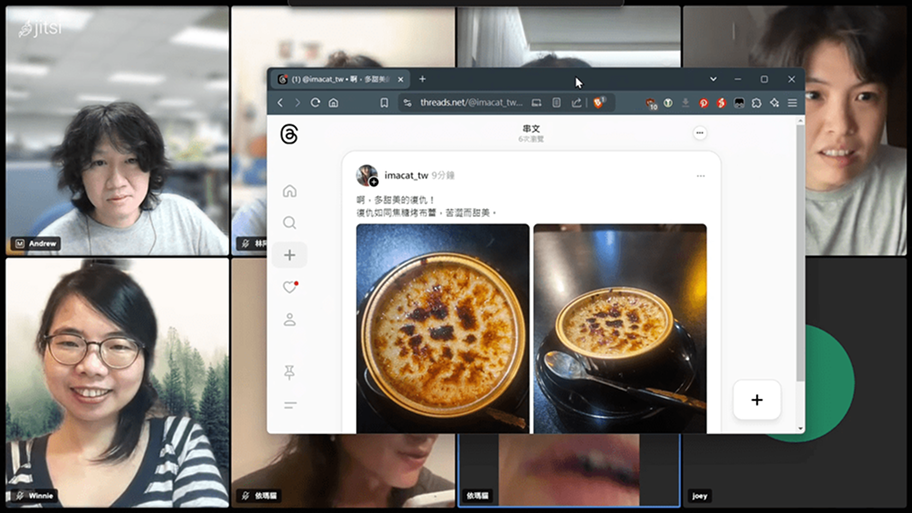
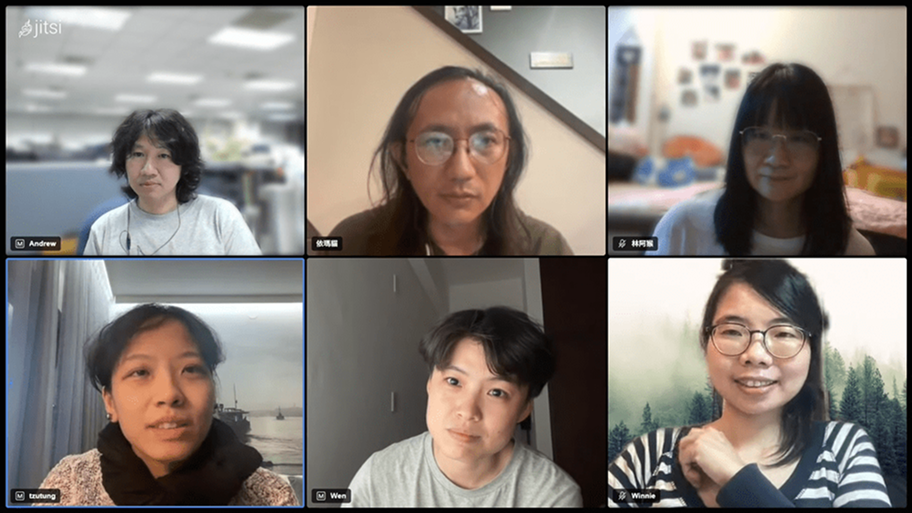
BOTAMEVE member, Jan 22, 2025 Screenshot by WERD NA,
Course Overview
This online class was faciliated by TT, and jointly decided upon by BOTAMEVE members, who wanted to collectively write their own "revenge (or gratitude) scripts".
TT introduced their project, offline.wiki, an offline network designed for information circulation. Later, the members scripted their imagined experiences 24 hours before and after their acts of revenge or gratitude, after TT introducing "The Hero's Journey" in scriptwriting. This was followed by a 10-minute exercise where each member took their first small step toward putting their chosen act of revenge or gratitude into practice.
A. Offline Wiki as its infromationa distribution method
TT starts Offline Wiki in 2022. The project then became the foundation for BOTAMEVE's USB stick distribution system. Offline Wiki was developed in response to various forms of censorship and internet attacks worldwide, including:
The Chinese government's cultural erasure of Uyghurs
Internet censorship in the Philippines
Cuba's offline information distribution system known as "El Paquete Semanal"
Israel's internet attacks in Gaza
These events underscore that while the internet is widespread and essential, it remains vulnerable to blocking and censorship. Furthermore, as evidenced by the #MeToo movement, discriminatory language continues to proliferate online. In contrast, a person-to-person, offline whisper network serves as a more crucial system for signaling potential perpetrators and providing support for marginalized communities. BOTAMEVE, therefore, also adopt this offline method, sharing the documentation and each member's revenge or gratitude script bypassing censorship.
Here includes some key circulation features:
Portable Library
Treating each USB drive as a "mobile library" of information and circulating it through trusted offline networks.
Anonymity and Security
Protecting authors and sensitive content through anonymous or semi-anonymous methods, minimizing the risk of traceability or misuse.
Public-Interest Content
Ensuring that materials serve the public good—by exposing injustice, promoting self-healing, or addressing toxic relationships.
B. Sripting the Hero's Journey
Before members begin writing their 24 hours revenge (or gratitude) stories, TT uses a common scriptwriting device – The Hero's Journey – to reframe trauma experiences. Here's how TT introduced the journey:
Part One: From Everyday Life to the Start of the Adventure
A hero's journey doesn't necessarily begin with a dramatic event—it often starts in the ordinary world, just as our own stories unfold in the midst of everyday life. And our every day life contains the familiar rhythm, a sense of security, and perhaps something we wish to protect. But when the call to adventure appears, everything changes. Sometimes, this call takes the form of an external challenge; other times, it emerges as an inner summons, compelling us to confront wounds buried deep within.
Confronting these inner wounds requires immense courage, and it's natural to resist the call, hoping that avoidance or denial might offer an easier path. But in moments of struggle and hesitation, a mentor often appears. This "mentor" might be a real person, a meaningful phrase, or a situation that powerfully reflects the wisdom our resilient hearts have been trying to convey. Their presence offers us a chance to rediscover and reclaim our strength.
Part Two: Entering the World of Adventure
Here, we step into the unknown—the moment of crossing our first threshold. This marks the beginning of a true journey of transformation. Leaving behind the comfort of familiarity, we open ourselves to new possibilities. In this realm of adventure, we face trials, meet allies, and encounter enemies. Challenges may arise from external forces, but often, they emerge from within. Along the way, we may find support from others, yet we must also confront our own doubts and fears. This is an essential path toward growth.
As we draw closer to our deepest pain, we approach our "inmost cave." This cave symbolizes our greatest fear, hurt, or trauma. Entering this space requires immense courage, as we must once again face the suffocating emotions we have long avoided. Yet, if we persevere, we arrive at a pivotal moment—the "ordeal," the climax of our journey. It is here that we see our true selves and begin to understand how past pain has shaped us.
Part Three: Gaining the Reward and Returning to Everyday Life
Having faced this pivotal test, we are granted a "reward" — a gift that might take the form of self-acceptance, inner peace, or a renewed perspective on ourselves. These treasures empower us as we embark on the journey back, carrying the strength and wisdom we've gained.
C. Freewriting the Script
After using the journey as an metaphor for our healing path, the memeber starts its freewriting session. Here's the prompt:
As you, the hero, decide to take action, what happens in the 24 hours before and after that pivotal moment of action?
Freewriting means writing continuously—without worrying about perfection. Whatever thoughts come to mind, keep them flowing. The key is not to stop.
TT then guides everyone into a meditative state before the writing begins:
— TT
"Now, please sit comfortably and relax your body. Close your eyes, and focus on your breathing—slowly inhale and exhale, feeling your body gradually relax.
Next, let's enter the setting of your revenge script. You've been gathering friends or resources, practicing, and finally taking action. Imagine the 24 hours before and after this moment. Picture the space you're in. What does it look like? Try to see every detail—colors, light, where objects are placed. What do you observe?
Now, notice the temperature of the air—warm or cold? Can you smell anything? Perhaps a familiar scent or one that feels oppressive? Listen to the sounds around you—footsteps, wind, or other subtle noises. Envision yourself truly hearing these sounds in your scene.
Finally, notice what emotions arise—'anger,' 'disappointment,' 'determination'? How does your body react in this moment? Are your muscles tense or relaxed? What feelings surface inside you? Let these sensations flow freely without trying to suppress or control them.
When you're ready, express everything you've just seen, heard, smelled, and felt in writing—descriptions of the environment, your inner emotions, anything—and weave it into your script."
Result
After writing their scripts, the participants planned to store the content on USB sticks, which would then circulate among radical bookstores and key nodes worldwide. One participant raised a concern about whether writing anonymously could undermine credibility or enable misuse of the content. In response, TT cited Wikipedia as an example: although contributions are often anonymous, the integrity of the system relies on trust. TT emphasized that the network of writing and circulation must be grounded in trust and that all content should adhere to the principle of "public interest." This guideline aims to prevent abuse while encouraging readers to form their own judgments, much as they do when encountering anonymous #MeToo stories.
Here are some of BOTAMEVE's members' ideas for what to include on the USB sticks:
A "micro-aggression diary."
A story about winning a dance competition as a visually impaired person.
A "therapeutic solo travel itinerary," intended to help others in need.
A "#MeToo battle manual," accompanied by related stories and confessions shared through a "whisper network."
A new online account created specifically to freely vent frustrations.
A script about "someone invisible" in the family secretly seeking revenge, highlighting the importance of emotional labor.
A series of "self-defense and counterattack techniques."
A massage therapy voucher for a select few, which includes a half-day solo trip for the giver.
A browser plugin designed to flag individuals implicated in #MeToo controversies.
At the end of the session, TT invited everyone to take a small, concrete step toward realizing their revenge or gratitude plans. For example, one participant used the time to apply for a dance competition, another contacted publishers to propose a book on narcissistic personality disorder, and someone else decided to take a moment to rest and enjoy a drink as a form of self-care.