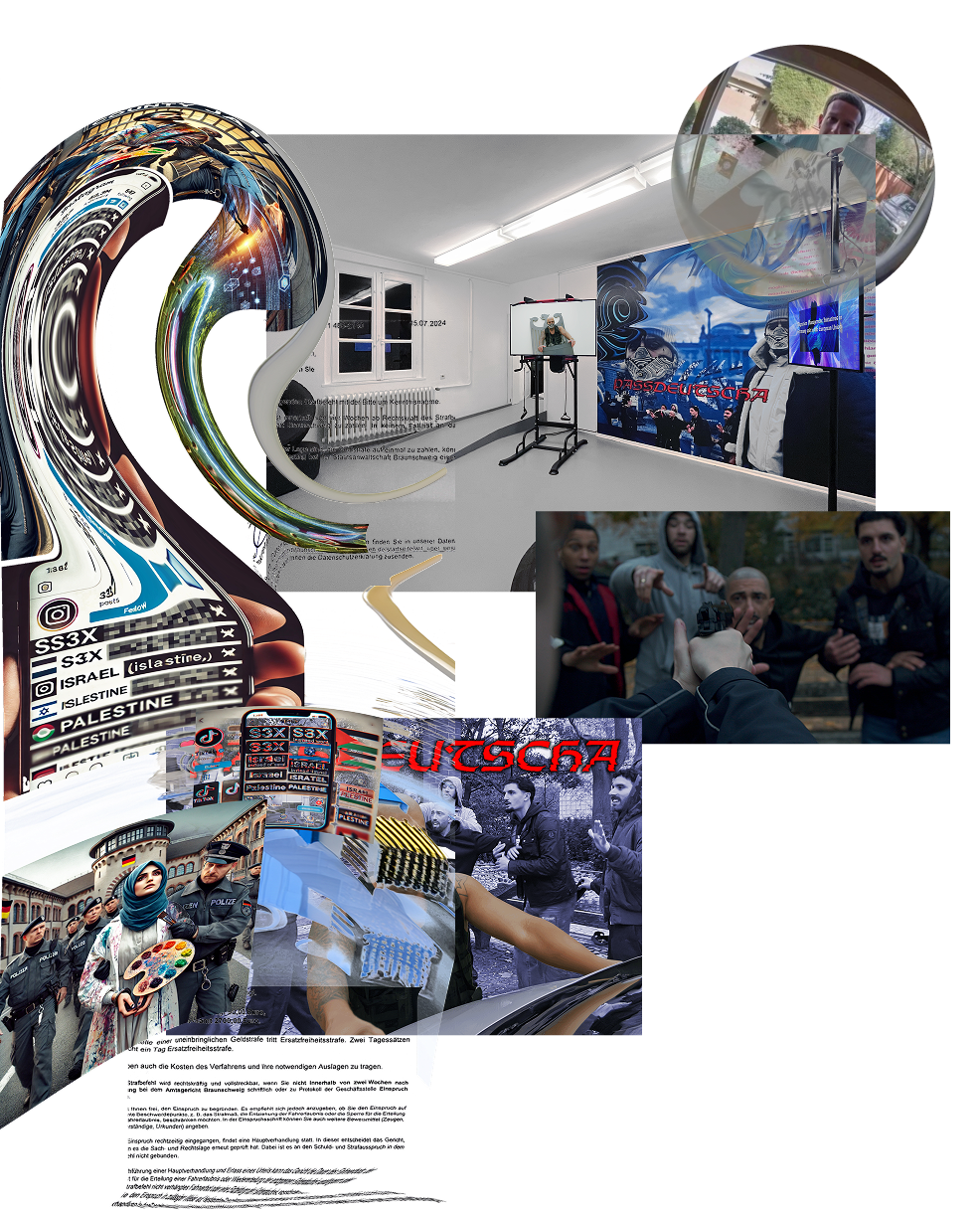
Anna Ehrenstein's latest work Injustice Systems is a poignant digital collage, video and sound art piece that critically examines the intersection of digital and physical censorship within anti-imperialist movements and art practices. This work draws from a recent legal battle following an exhibition and is a visual study Ehrenstein conducted on the algorithmic censorship of content related to the genocide in Palestine. Injustice Systems exposes the intricate ways in which legal frameworks and digital content moderation uphold Euro-American global dominance and perpetuate the Islamophobic climate of the 21st century.
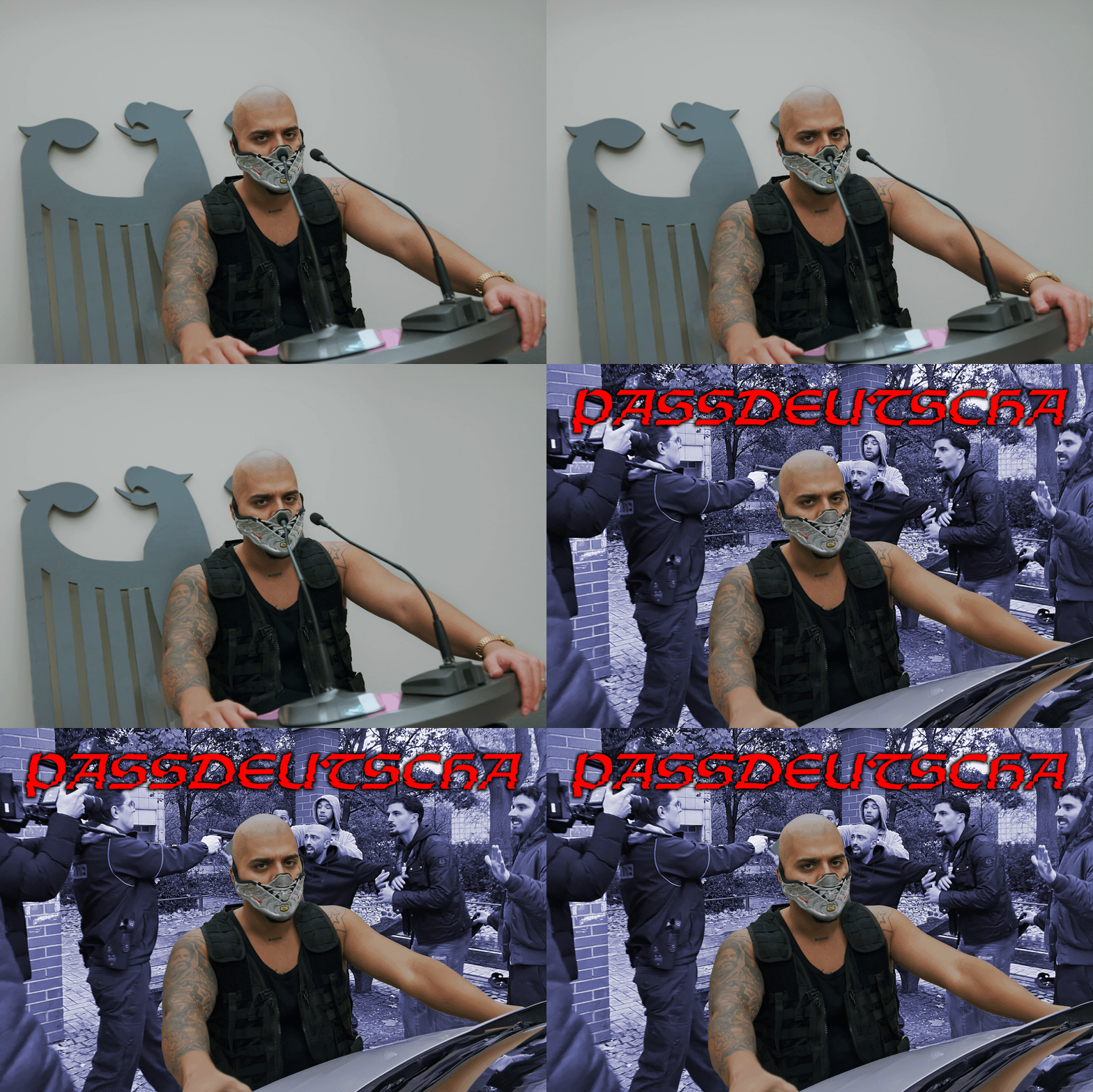
During a preview tour of her exhibition Imagined Inevitabilities at Kunstverein Braunschweig in Germany, Ehrenstein presented her video work Passdeutscha (2023–2024). This piece emerged from a collaborative project with rapper, Netflix star, and artist Osiriz33 (Leonidas Emre Pakkan) and was showcased within a two-screen sculptural installation.
Passdeutscha critiques the intersection of integration discourse, racism, and racialized police violence in Germany, utilizing a "deutsch-rap-lecture-performance" format that evolved from a series of workshops and postcolonial theory reading groups co-facilitated by Ehrenstein and Osiriz33. These sessions engaged with the works of thinkers such as Fanon, Glissant, Baldwin, and German voices like Max Czollek, Harald Welzer, and Fatima El-Tayeb.
The collaborative process involved the co-writing of lyrics, script development, and the direction of an experimental narrative music video that critiques media representations and cultural stereotypes. The video challenges the stigmatization of Muslim communities in Germany, often portrayed as "refusing to integrate," by celebrating this resistance and advocating for a new relational sensibility that transcends historical and contemporary oppression, particularly in the context of upcoming climate migration.
During her presentation to the museum's board members, Ehrenstein critiqued the co-option of Holocaust remembrance culture by Islamophobic, anti-migrant rhetoric, particularly from right-wing populist politician Friedrich Merz. This critique, which is also featured in Passdeutscha, provoked a strong reaction from some attendees, leading to one individual verbally attacking Ehrenstein and others leaving the room. Subsequently, Ehrenstein was sued by a museum member, with the witness testimony of the woman who had yelled at her.
The legal proceedings, which were forwarded to Merz, resulted in Ehrenstein being fined €3,000 and incurring €2,000 in legal fees for allegedly "insulting" and "threatening the integrity" of the politician. Ehrenstein was compelled to pay for what should have been protected as free speech.
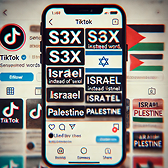
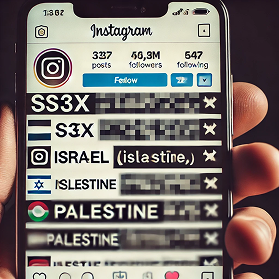
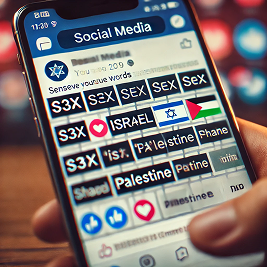
Concurrently, there has been an increasing trend of self-censorship on social media concerning Israel's actions in Palestine. Users have found that employing certain "shadowbanned" vocabulary leads to a significant reduction in the reach of their posts. Shadow banning, a subtle form of censorship, manipulates algorithms to decrease the visibility of specific content without the user's knowledge. Unlike overt content removal, shadow banning quietly restricts the dissemination of information, significantly curtailing engagement metrics like likes, comments, and shares. While social media companies often justify shadow banning as a tool to combat misinformation, hate speech, or spam, this practice has been criticized for its lack of transparency and potential infringement on free speech.
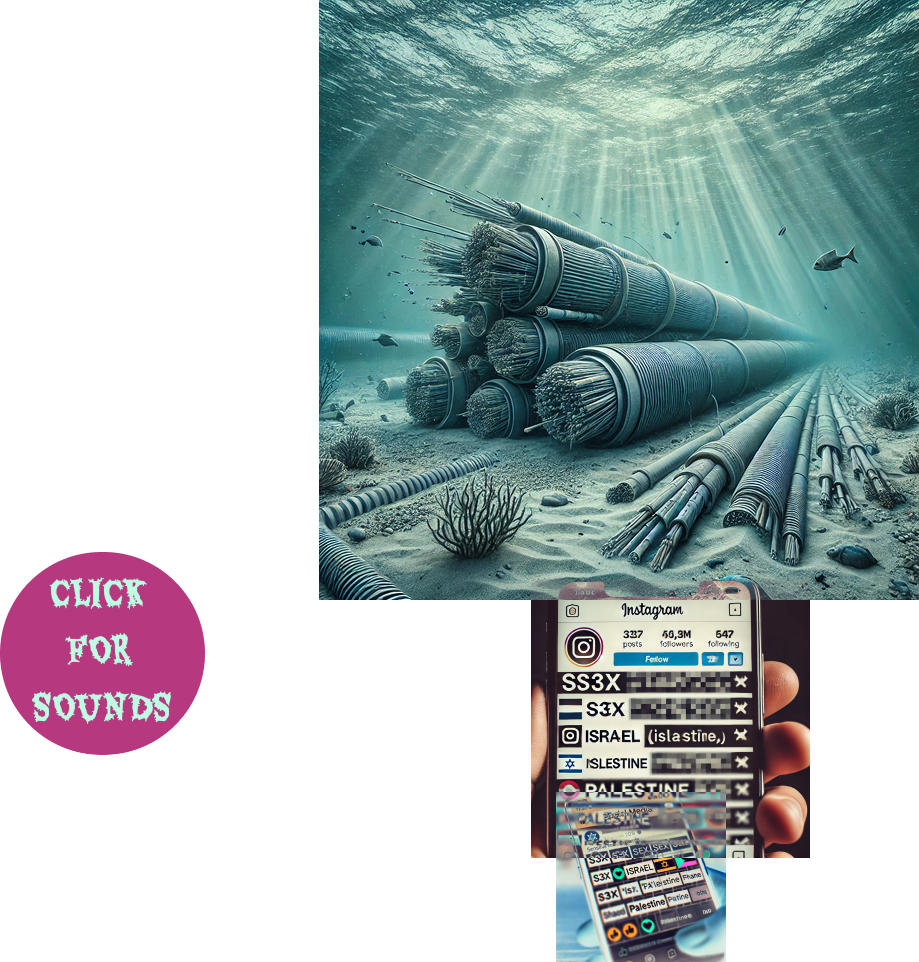
Ehrenstein's digital collage and sound art piece includes excerpts from the court documents exchanged during her legal battle to defend freedom of speech and artistic expression in Germany. The work features images from the exhibition that was deemed the "crime scene," alongside generative AI imagery, viral memes, and Ehrenstein's voice reading and reclaiming the court declaration that sought to punish her activism and her lawyers’ defense in bits and pieces.This newly created assemblage meditates on the complex interplay between physical and digital networks of domination and separation, as well as the institutionalized and networked censorship that sustains them.